
Keep DVR CCTV Security system with four cameras online during load shedding.
Backup Power for more than 2.5 hours
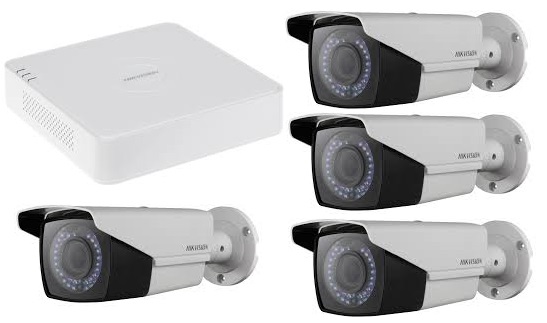
Device List:
| Function | Device | Model | Volt | Rating | Wh |
| NVR | Hikvision | DS-7108HQHI-K1 | 12V | 1.33A | 15.96 |
| CCTV Camera | Hikvision | DS-2CE16DOT-VFIR3f | 12V | N/A | 5 |
| CCTV Camera | Hikvision | DS-2CE16DOT-VFIR3f | 12V | N/A | 5 |
| CCTV Camera | Hikvision | DS-2CE16DOT-VFIR3f | 12V | N/A | 5 |
| CCTV Camera | Hikvision | DS-2CE16C2P-VFIR3 | 12V | N/A | 4.5 |
Total Wh = (15.96+5+5+5+4.5) = 35.46
All devices are directly connected to 12V output ports of the Power-Buddie DC UPS. The test was connected during the evening with infrared enabled and all 4 cameras were recording continuously to the internal hard drive.
Theoretical backup time for Power-Buddie DC UPS 75Wh = 126.9 minutes
This is calculated (UPS Wh (75) \ Total device Wh (35.46) * 60 minutes)
For the above mentioned scenario, the Power-Buddie DC UPS 75Wh (24000 mAh) provided backup power for 157 minutes.
The cameras on their own were using between 3 and 3.5W per camera.
Why does it appear that the UPSes are performing far better than what they are rated for? Most devices, although not always the case, use substantially less watts than their maximum rating. Hence why it seems that the UPSes are performing better than expected.