
Small School network - 53.5V PoE switch, 3 APs, Media converter and Cloud Key
You can see the school's review of the Power-Buddie on their Facebook page.

Backup Power for 4.75 hours
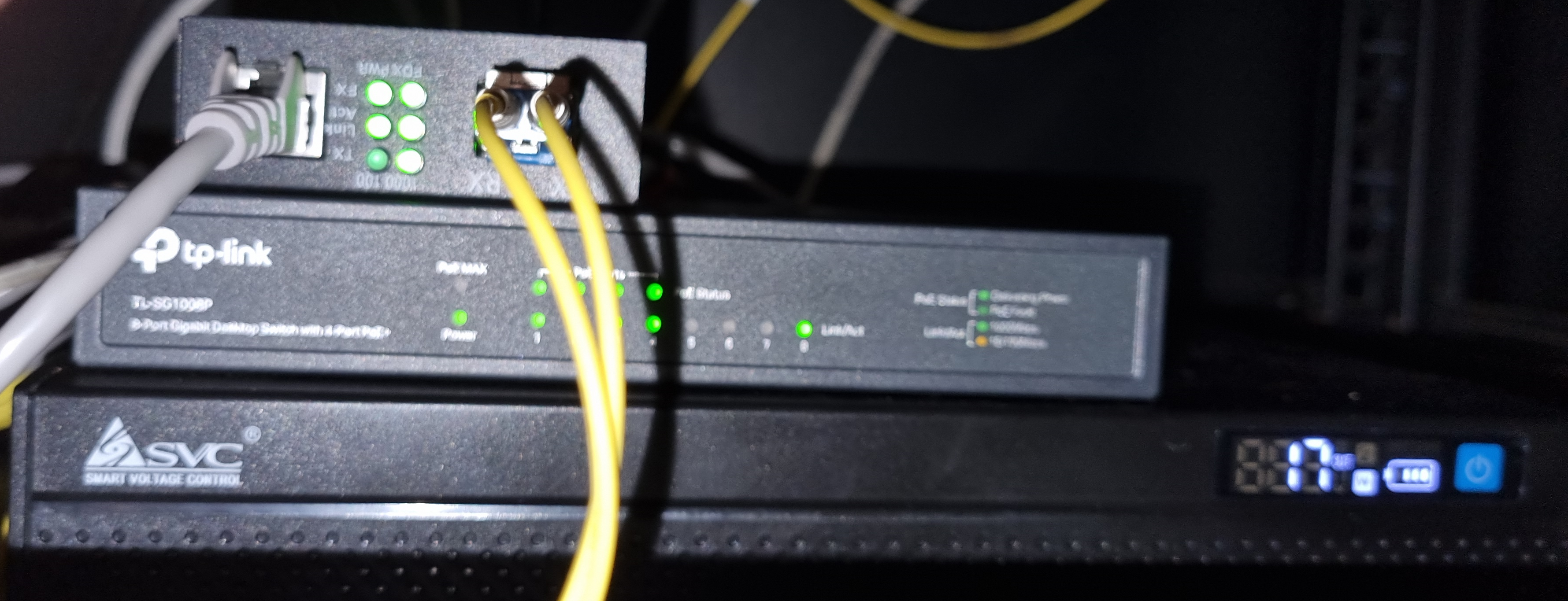
Device List:
| Function | Device | Model | Volt | Rating | Wh |
| PoE Switch | TPLink | NET-TL-SG1008P | 53.5V | 1.31A | 70 |
| Fibre Converter | TPLink | TPLink | 9V | 0.6A | 5.4 |
| Cload controler | Ubiquiti | Cloud Key Gen1 | N/A | N/A | 5 |
| Access Point X 2 | Ubiquiti | UAP-AC-LR | N/A | N/A | 2 X 6.5 |
| Access Point | Ubiquiti | U6 Mesh | N/A | N/A | 11.4 |
- 53.5V 8 port PoE Switch connected to the 48V DC power port
- Fibre media converter connected to 9V port
- 1 X Ubiquiti U6 Mesh connected to switch PoE port
- 2 X Ubiquiti UAP-AC-LR connected to switch PoE port
- 1 X UniFi Cloud Key connected to PoE port
For the above mentioned scenario, the Power Buddie DC UPS 75Wh (24000 mAh) provided backup power for 285 minutes.
Why does it appear that the UPSes are performing far better than what they are rated for? Most devices, although not always the case, use substantially less Watts than their maximum rating. Hence why it seems that the UPSes are performing better than expected. The UPS reached a maximum of 21W during startup and averaged between 17 and 18W.