
With so many UPSes on the market today many people make uninformed decisions and do not get the value they intended from their purchase. And let’s not mention the less than honest advertising which result in people buying lemons instead of oranges.
The information below is intended to provide good and honest information to make sure you get what you expect and value for money if you decide to buy a DC UPS. If you have a question and you do not see the answer please give us a shout, you can find our contact details here.
We assume that you already know the difference between a normal UPS and a DC UPS, if not you can visit our FAQ page.
Tip 1: Don’t be fooled by the mAh rating!
Can you tell which one of these DC UPSes will give you the longest backup time?
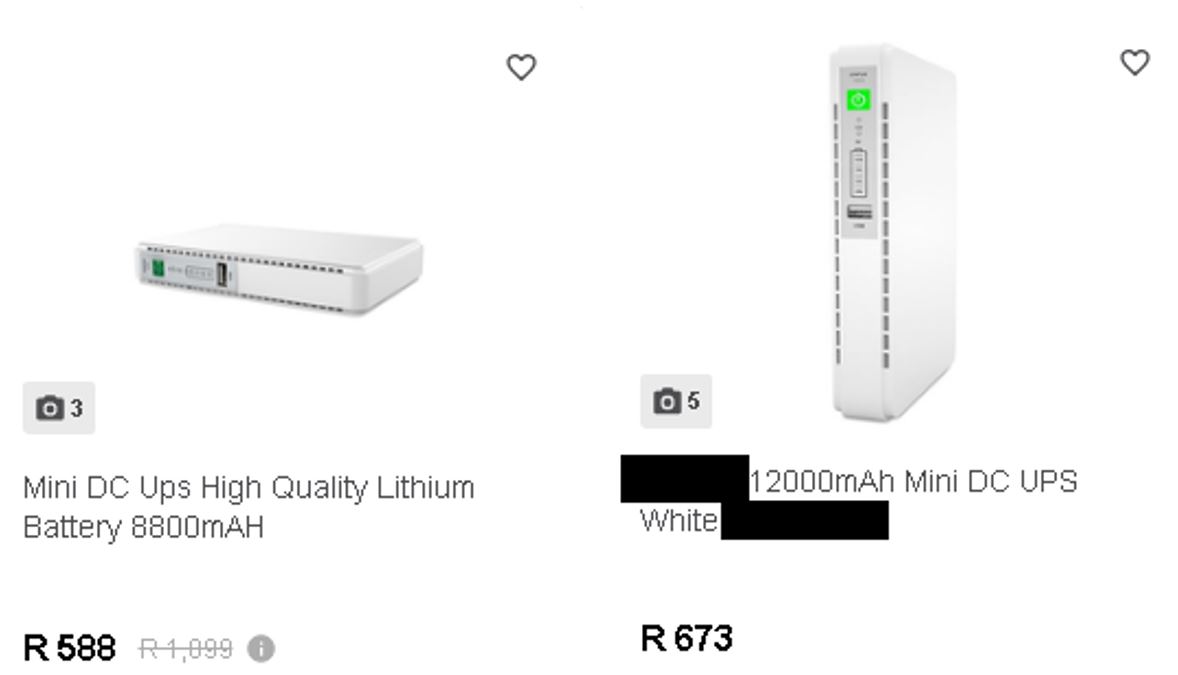
For less than R100 extra it just makes sense to buy the 12000mAh, or does it? We bought the 12000mAh unit and not to our surprise it is a normal 8800mAh unit.
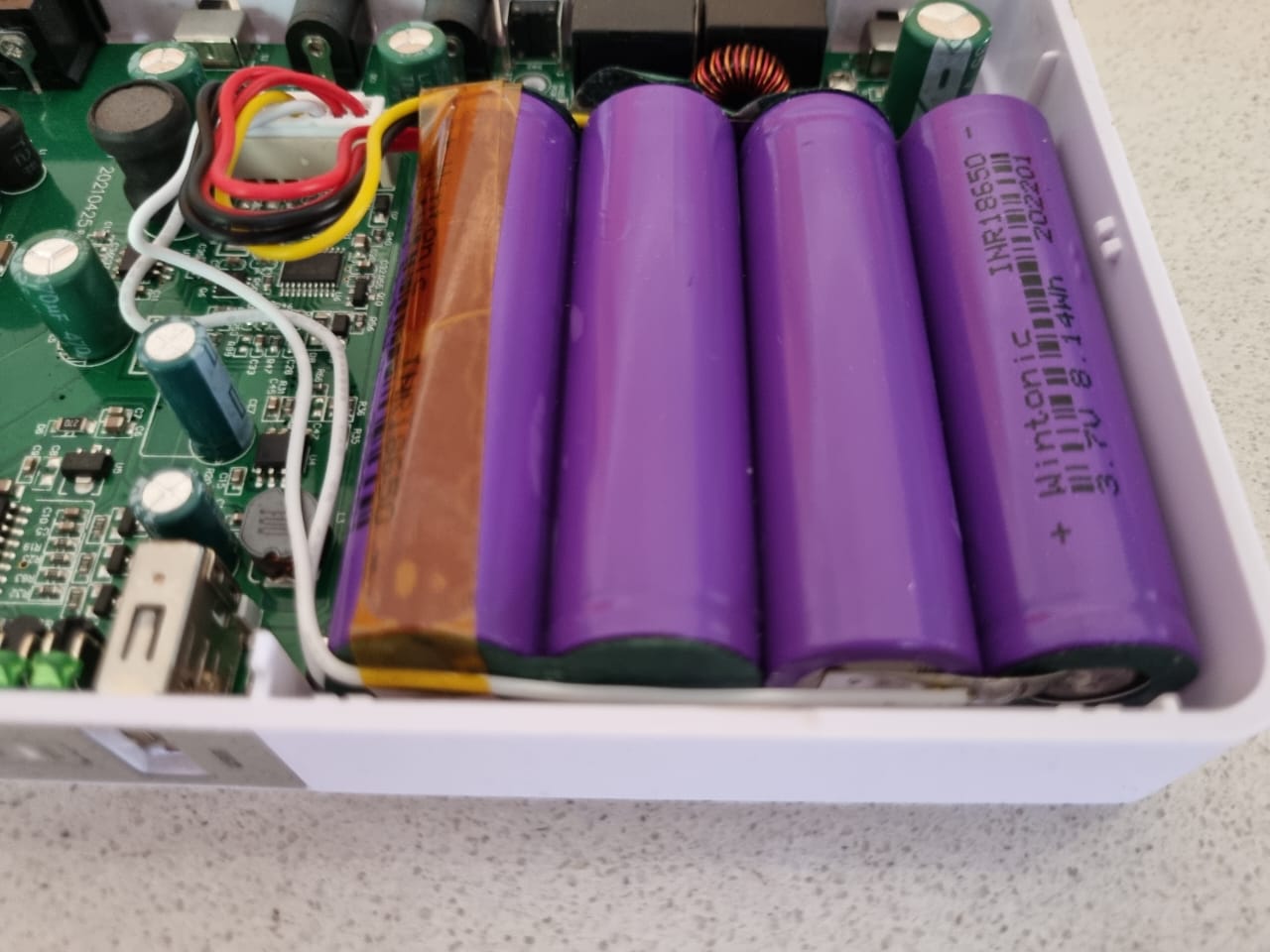
Batteries installed in the UPS: 4 X 8.14Wh = 32.56Wh @ 3.7V = 8800mAh
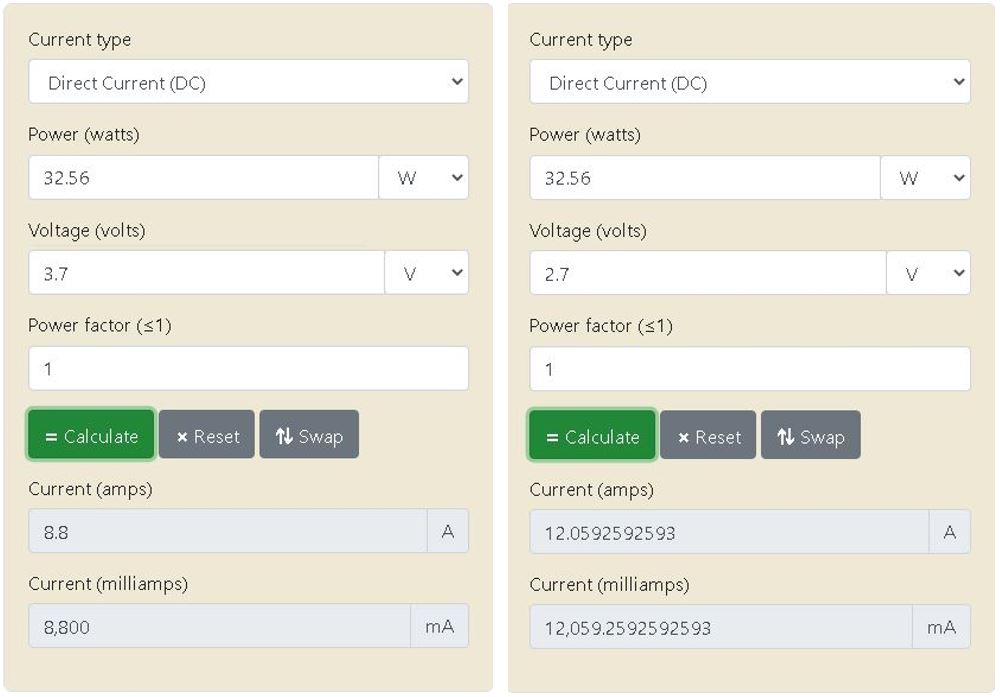
In the calculation above, by changing the volt to 2.7V instead of 3.7V gives you 12000mAh. What is going on here?
The Ah rating is not an effective way of comparing the backup capacity of a DC UPS without knowing the voltage being used to calculate it. The better way of comparing DC UPSes is to use the Wh rating and to understanding what your Watt requirements are. We have a high-level overview of how to calculate your required Watts here.
One of our clients bought an UPS (14000mAh), in a different form factor but the same physical size as these UPSes above, and you can guess what the actual specification were. We have also seen a company advertising a 32000mWh UPS, that is 32Wh which is generally known as an 8800mAh UPS.
Also make sure you buy from a reputable shop that have the required technical expertise to advise you. And let us be clear, there are two requirements here as most reputable online and physical shops does not have the required technical skills to identify these improper claims.
To conclude Tip 1,
There are many ways that companies are trying to make their product seems better than the competition. If the price and the physical size of the UPS does not match the technical specifications think twice before making the purchase.
Tip 2: Don’t judge a book by its cover!
Most of the DC UPSes on the South African market is manufactured in China which means that you will see a lot of UPSes that looks very similar but are in fact very different from a quality and functionality perspective. The output ports, battery chemistry (See Know Your batteries in Tip 3), and battery capacity may be different which will make a huge difference in price and performance in two similar looking UPSes.
As an example, the above mentioned form factor can range in feature and functionality such as:
- LCD display vs LED indicators
- Battery chemistry (Lithium-ion vs LiFePO4)
- Battery capacity
- Number of output ports
- The Voltage of output ports
Keep a look out, Tech-Buddies will launch a version of the above form factor UPS that will provide the quality and performance you expect for our products!
To conclude Tip 2,
Make sure you understand your requirements and then compare the technical specifications rather than the appearance of the UPSes you are interested in.
Tip 3: Know your batteries and ask if it is not specified!
Batteries are one of the biggest cost factors in an UPS, so make sure you understand what batteries you need and that it is explicitly specified in the technical specifications of the UPS you are buying. So let’s look at different types of batteries:
Lead Acid & Lead Acid Gel batteries – Cheapest battery available
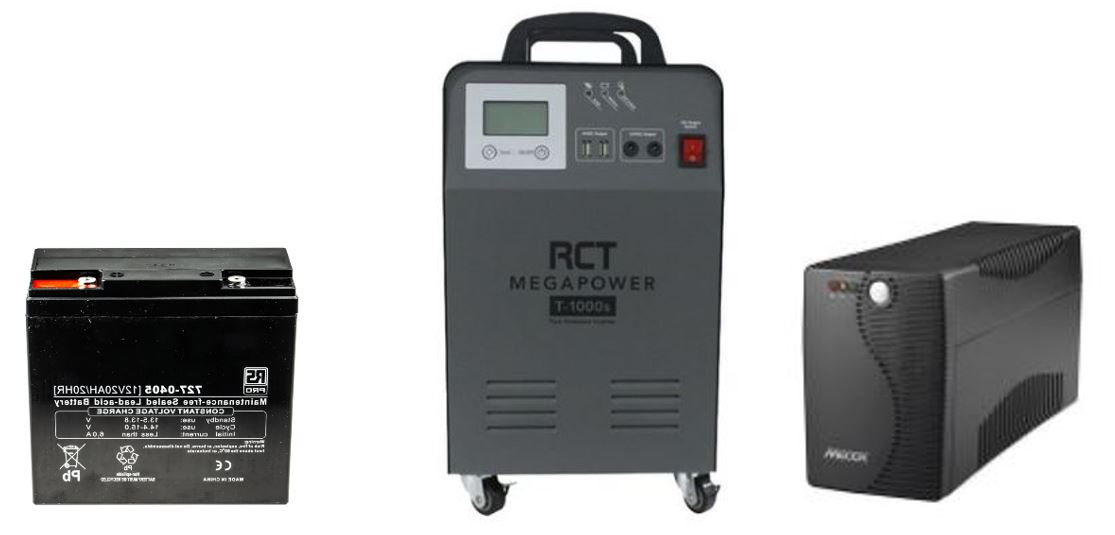
Mostly used in normal 220V UPS and Trolly UPSes (Not usually used for DC UPSes)
Devices with lead acid and lead acid gel batteries are not intended for load shedding and reputable dealers normally states that these devices are only intended to be used as backup to safely shutdown devices or in emergencies.
If you buy one of these and use it for loadshedding you will be disappointed very soon as the batteries are not built for the depth of discharge and frequent cycles required for loadshedding.
In line with our first tip, if you are not paying in the region of R15 000 to R20 000 for a 1KW trolley UPS it is most likely not suitable for loadshedding.
Lithium-ion – Less expensive than Lithium Phosphate (LiFePO4)
(No, Lithium-ion is not the same as Lithium Phosphate)
Lithium-ion batteries is used in cell phones and most consumer products that are rechargeable such as electric toothbrushes, wireless speakers, power banks, DC UPSes and other 220V UPSes.
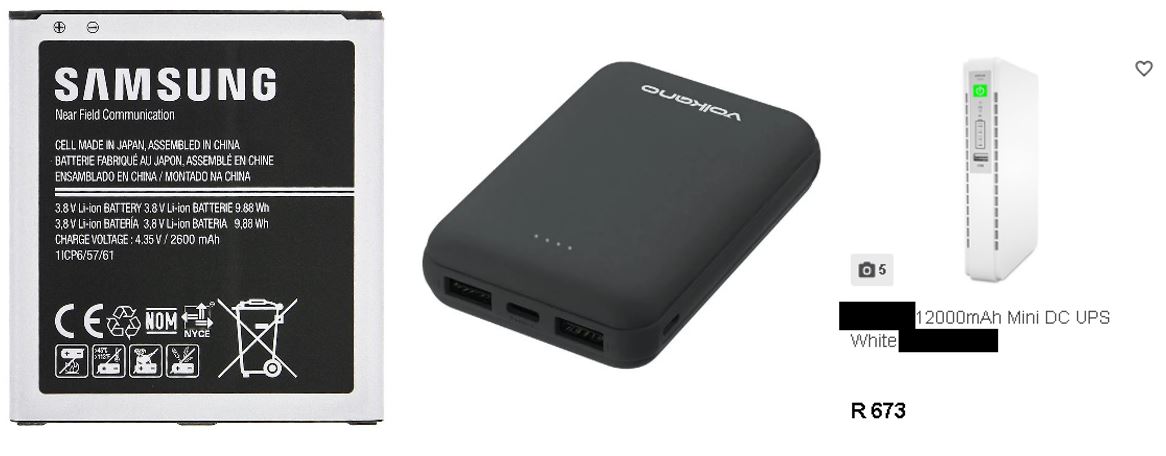
Any UPS you want to use for load shedding should at a minimum use Lithium-ion batteries. Although Lithium-ion is not the flagship chemistry for loadshedding, it is much better in handling the required depth of discharge and number of discharge cycles associated with loadshedding.
In the past there were many of these batteries that exploded due incorrect use as they where intended to be charged and removed from the charger such as in the case of a cell phone. However changes in cell packaging and chemistry have made them much safer and are now considered safe to use in UPSes.
Lithium Phosphate (LiFePO4) – The flagship and most expensive battery
If you need something that will last and is the best suitable for loadshedding there is no debate that this is the battery chemistry you need.
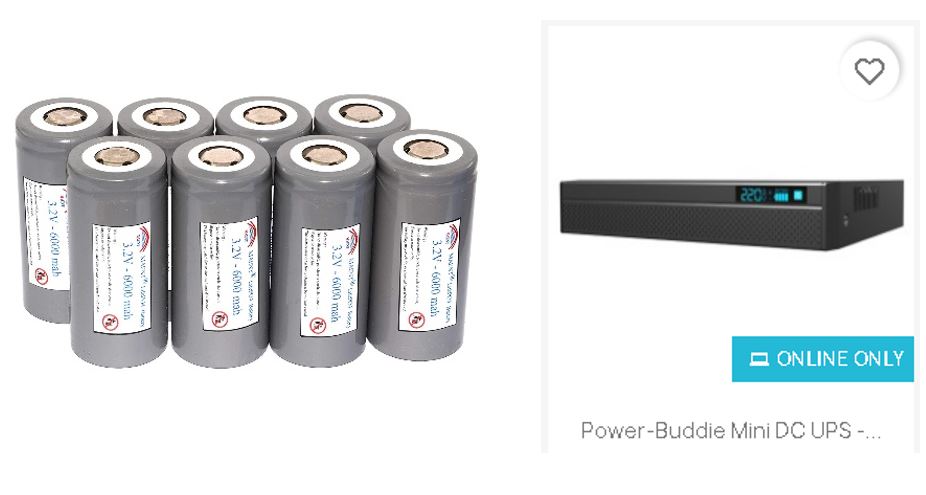
Yes, we had to add our Power-Buddie UPS here, we are proud of it!
LifePO4’s longer cycle life means the LiFePO4 batteries will outlast lithium-ion for 2 to 5 times longer depending on the quality of the LifePO4 batteries. Unfortunately, it does come at a price and if the UPS does not state specifically LiFePO4 batteries or is a lot cheaper than other UPSes with LiFePO4 batteries it is most likely Lithium-ion.
You will find that some advertisers do not specify or provide confusing information to hide the fact that they do not use LiFePO4 batteries. Some adds will only specify Lithium Batteries or something like Lithium-Ion/LiFePO4.
To conclude Tip 3,
Understand your requirements and choose the right battery chemistry for your use case. If you decide on LifePO4 batteries, make sure it is explicitly specified in the technical specifications, do not assume. LiFePO4 and Lithium-ion are not equal!